

Quitting smoking is one of the best things you can do for your health, but it is also one of the hardest. Nicotine is addictive, habits are deeply ingrained, and willpower alone rarely cuts it.
The good news is that you do not have to do it on your own. The NHS offers free stop smoking support through community pharmacies, including one-to-one consultations, nicotine replacement therapy, and regular check-ins to keep you on track.
At Rank Pharmacy, we have helped many people in Luton and Bedfordshire stop smoking for good. In this article, we will explain how pharmacy-based stop smoking support works, what treatments are available, and why getting the right help makes you far more likely to succeed.
In this article
Why Is Smoking So Hard to Quit?
Smoking is not just a habit. It is an addiction. Nicotine reaches your brain within seconds of inhaling, triggering a release of dopamine that creates a temporary feeling of calm and focus. Over time, your brain adjusts and starts to depend on nicotine to feel normal.
When you try to stop, you experience withdrawal symptoms: irritability, difficulty concentrating, anxiety, restlessness, increased appetite, and strong cravings. These are at their worst in the first week or two and gradually ease, but they can be intense enough to derail even the most determined attempt.
On top of the physical addiction, there are behavioural triggers. Smoking with a morning coffee, after a meal, during a break at work, or when socialising becomes so automatic that the urge feels almost reflexive.
This is why professional support matters. People who use a combination of behavioural support and nicotine replacement therapy are roughly three times more likely to quit successfully than those who try to go cold turkey.
How Does NHS Stop Smoking Support Work?
The NHS stop smoking service at your pharmacy typically follows a structured programme over several weeks. Here is what to expect:
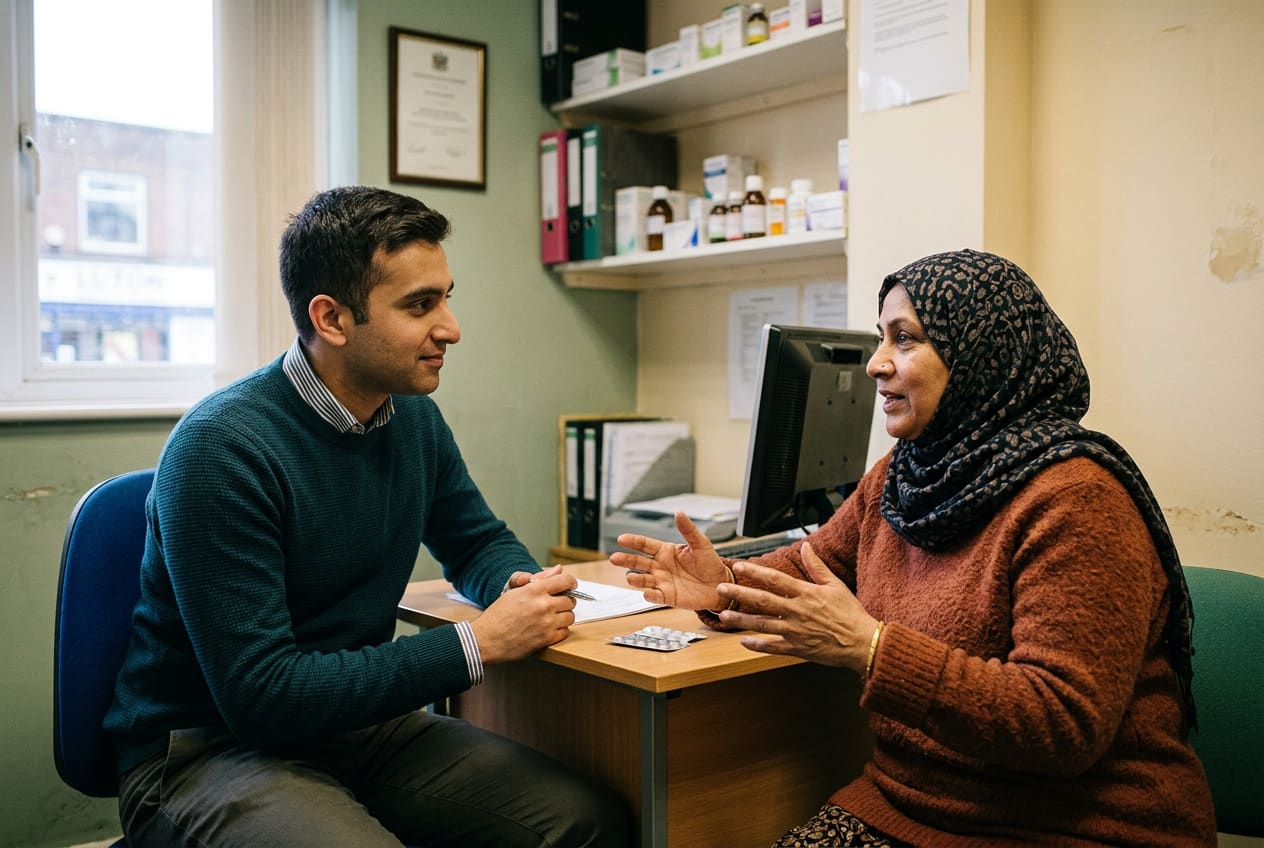
Your first appointment is a longer consultation, usually around 20 to 30 minutes. Your pharmacist will talk through your smoking history, how much you smoke, your previous quit attempts, and what triggers your cravings. Together, you will set a quit date, usually within the next week or two.
From that point, you will have regular follow-up appointments, typically weekly for the first four weeks and then at intervals after that. These check-ins are short but valuable. Your pharmacist will measure your carbon monoxide levels using a simple breath test, which gives you tangible evidence of the improvement in your body.
Between appointments, you will have access to nicotine replacement products or other stop smoking medication, supplied free of charge through the NHS scheme. Your pharmacist will adjust your treatment as needed based on how you are getting on.
The whole programme is designed to be practical and supportive. There is no judgement if you slip up. The focus is on progress, not perfection.
Nicotine Replacement Therapy: What Are Your Options?
Nicotine replacement therapy (NRT) works by giving your body a controlled dose of nicotine without the harmful chemicals found in cigarette smoke. This takes the edge off withdrawal symptoms and cravings while you break the behavioural habit.
There are several forms of NRT available:
Patches deliver a steady level of nicotine through the skin over 16 or 24 hours. They are good for background craving control and are easy to use.
Gum provides a quick burst of nicotine when you chew it. Available in 2mg and 4mg strengths, it gives you something to do with your mouth, which some people find helpful.
Lozenges dissolve slowly in the mouth and are a discreet option for managing cravings during the day.
Inhalators look a bit like a cigarette and allow you to inhale nicotine vapour. They can help with the hand-to-mouth habit that many smokers miss.
Nasal spray delivers nicotine more quickly than other NRT products, which can be useful for heavy smokers with strong cravings.
Mouth spray works in a similar way to the nasal spray, providing fast-acting relief.
Many people find that combining two forms of NRT works best, for example, wearing a patch for steady background control and using gum or a spray for breakthrough cravings. Your pharmacist will help you find the right combination.
What About Prescription Stop Smoking Medication?
If NRT alone is not enough, there are prescription medications that can help.
Varenicline (previously known as Champix) works by reducing the pleasure you get from smoking and easing withdrawal symptoms. It is taken as a tablet over a 12-week course and has a strong evidence base for effectiveness. Your GP can prescribe this, and your pharmacist can support you through the course.
Bupropion (Zyban) is an antidepressant that also helps reduce cravings. It is taken as a tablet and is usually prescribed as a 7 to 9 week course.
Both of these require a prescription from your GP, but your pharmacist can advise whether they might be suitable for you and support you while you take them.
It is worth noting that vaping, while not an NHS-approved treatment, is widely acknowledged as significantly less harmful than smoking. If other methods have not worked for you, your pharmacist can discuss this as an option and help you find a sensible approach.
The Health Benefits of Stopping
The benefits of quitting start almost immediately and continue to build over time.
Within 20 minutes, your heart rate begins to return to normal.
After 48 hours, your body has cleared all carbon monoxide. Your lungs start to clear mucus and your sense of taste and smell begin to improve.
After 72 hours, your breathing becomes easier as your bronchial tubes start to relax.
After 2 to 12 weeks, your circulation improves and physical activity becomes easier.
After 1 year, your risk of heart attack has halved compared to a smoker.
After 10 years, your risk of lung cancer has halved compared to a smoker.
After 15 years, your risk of heart attack is the same as someone who has never smoked.
Beyond the long-term health gains, most people notice day-to-day improvements quickly. More energy, better sleep, clearer skin, fresher breath, and, of course, the money saved. A 20-a-day smoker spends over £4,500 a year on cigarettes.
Tips for Staying on Track
The first two weeks are usually the hardest. After that, cravings become less frequent and less intense. Here are some practical tips that can help:
Know your triggers. If you always smoke after a meal, go for a short walk instead. If stress is a trigger, practise deep breathing or find another outlet.
Keep your hands busy. Some people find that holding a pen, squeezing a stress ball, or using an inhalator helps replace the physical habit.
Stay hydrated. Drinking water can help manage cravings and flush nicotine from your system.
Tell people around you. Letting friends, family, and colleagues know you are quitting creates accountability and means they can offer support rather than offering you a cigarette.
Avoid alcohol in the early weeks if it is a trigger. Many people associate drinking with smoking, and alcohol lowers your resolve.
Do not be discouraged by setbacks. A slip does not mean failure. Most successful quitters have tried more than once before stopping for good.
Use your pharmacy check-ins. These regular appointments are there to keep you motivated, troubleshoot any issues, and adjust your treatment if needed.
How Rank Pharmacy Can Help
At Rank Pharmacy, we offer the full NHS stop smoking service. This includes:
A one-to-one consultation to assess your smoking habits and set a quit date.
Free nicotine replacement therapy (patches, gum, lozenges, inhalators, or sprays) supplied through the NHS scheme.
Regular follow-up appointments with carbon monoxide monitoring to track your progress.
Ongoing support, advice, and encouragement from a pharmacist who understands what you are going through.
There is no charge for any of this. It is fully funded by the NHS and available to anyone who wants to quit.
If you have tried before and it did not work, that is fine. Many people need more than one attempt, and having professional support this time around could make all the difference.
Conclusion
Stopping smoking is hard, but it is far from impossible, especially with the right support. Free NHS stop smoking services at your local pharmacy give you access to proven treatments, regular check-ins, and practical advice from someone who is genuinely invested in your success.
If you are thinking about quitting, or if you have tried before and want to give it another go, walk into Rank Pharmacy and ask about our stop smoking service.
No judgement. No pressure. Just honest, practical help from a team that wants to see you succeed.
Explore our health & wellness services
Ready to take the next step? Browse our health & wellness services and book your appointment directly with our team.
View services